
Religious tourism witnessed 1,439 million tourists in 2022, generating Rs 1.34 trillion in revenue.

India's four listed Real Estate Investment Trusts (Reits) collectively distributed 13 per cent more funds to their shareholders in fourth quarter of financial year 2024-25 (Q4FY25) at Rs 1,553 crore on year, reflecting the growing strength of the sector fuelled by strong leasing activity, especially from Global Capability Centres (GCCs).
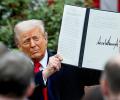
India is already negotiating a bilateral trade agreement with the US. The two countries are aiming to finalise the first phase of the pact by fall (September-October) of this year.

Chinese import tariffs have unwittingly come to India's assistance to help boost imports of US liquefied petroleum gas (LPG) at rates cheaper than what it pays for supplies from West Asia, according to industry sources and shipping data.
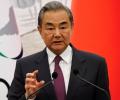
China on Tuesday called for a 'comprehensive and lasting ceasefire' between India and Pakistan, urging both countries to properly handle their differences through dialogue.
In October 2024, Jindal Stainless challenged a Goods and Services Tax (GST) notice in the Delhi high court. It was about corporate guarantees issued to related parties by its former group company, Jindal Stainless (Hisar), before their merger in March 2023.
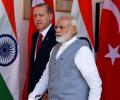
India-Turkiye ties are strained over Ankara's Islamabad tilt, its arms links with Pakistan, and fallout from the Pahalgam terror attack.

JSW Steel, owned by Sajjan Jindal, has emerged as the world's most valuable steelmaker, boasting a market capitalisation (mcap) of nearly $30.31 billion, according to Bloomberg data.
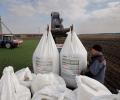
For the first time, the government is likely to dip into the Oil Industry Development Fund (OIDF) to finance part of its fertiliser subsidy programme for 2025-26, according to official sources. The finance ministry has accounted for Rs 23,000 crore in the FY26 Budget as net additional resources to be drawn from dedicated reserve funds, including the OIDF, the Agriculture Infrastructure and Development Fund, and the Universal Service Obligation Fund.
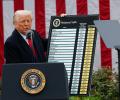
The official said there are both challenges and opportunities for India as many of its competitor countries in exports, such as China Vietnam, Bangladesh, Cambodia and Thailand, face higher duties.
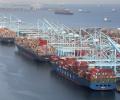
India and the US have decided to hold sector-specific talks in the coming weeks to finalise the structure of the proposed bilateral trade agreement (BTA), the government said on Saturday. The engagement between the two countries came in the backdrop of the USA's threat to impose reciprocal tariffs on its key trading partners, including India, on April 2.
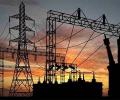
The output of eight core infrastructure sectors grew marginally by 0.1 per cent in January, mainly due to growth in the production of fertiliser, steel and electricity. The core sectors had expanded by 2.2 per cent in January 2020, according to the provisional data released by the commerce and industry ministry on Friday. Coal, crude oil, natural gas, refinery products, and cement recorded negative growth in January.

The move is expected to offer a breather to companies, who have been on tenterhooks following Thursday's order. DGFT will soon issue a notification on timeline extension, IT Ministry sources said. In a post on 'X' social media platform (earlier known as Twitter), Minister of State for Electronics and IT Rajeev Chandrasekhar said: "There will be a transition period for this to be put into effect, which will be notified soon".
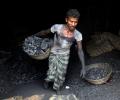
The production of eight infrastructure sectors rose by 7.5 per cent in October on healthy performance by the segments of coal, natural gas, refinery products and cement, official data released on Tuesday showed. The output of eight core sectors of coal, crude oil, natural gas, refinery products, fertilisers, steel, cement and electricity had contracted by 0.5 per cent in October 2020, according to the data released by the commerce and industry ministry. Core sectors' growth stood at 4.5 per cent in September this year.

Growth in demand for diesel, India's most consumed petroleum product, fell to its lowest since the pandemic in the financial year ended March 31 as the economy expands at a slower pace and consumption shifts to cleaner fuels. Diesel consumption rose 2 per cent to 91.4 million tonnes in 2024-25 (April 2024 to March 2025) fiscal, according to provisional data released by the Petroleum Planning and Analysis Cell (PPAC) of the Oil Ministry.
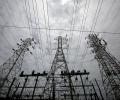
The output of eight core sectors jumped by 56.1 per cent in April mainly due to a low base effect and uptick in production of natural gas, refinery products, steel, cement and electricity, official data released on Monday showed. The eight infrastructure sectors of coal, crude oil, natural gas, refinery products, fertilisers, steel, cement and electricity had contracted by 37.9 per cent in April 2020 due to lockdown restrictions imposed to control the spread of coronavirus infection. In March this year, the eight sectors had recorded a growth rate of 11.4 per cent.

Government employees in Bangladesh locked down the main gate of the Bangladesh Secretariat in Dhaka, protesting a new service law that allows for easier dismissal of officials for misconduct. The protest, which lasted for about half an hour, disrupted government operations. The employees also threatened to continue their protests until the ordinance was scrapped. Meanwhile, the protest by employees of the Dhaka South City Corporation, demanding the installation of BNP leader Ishraque Hossain as its mayor, has brought administrative services to a halt. These protests, coupled with concerns raised by the business community and the military, highlight a growing sense of unease in Bangladesh over the policies of the interim government.
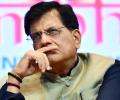
A government official said India and the US are exploring an interim trade deal within 90 days.

Retirement fund body EPFO added 16.05 lakh net new members in December, which is 9.69 per cent higher compared to November 2024, as per the payroll data released on Tuesday. Further, a labour ministry statement said there was a growth of 2.74 per cent in net payroll additions compared to December 2023.

China has defended its newly-released AI tool DeepSeek, after several countries, including India, imposed restrictions on government officials accessing it. Beijing claims actions against DeepSeek amount to "politicisation" of trade and tech issues and vowed to protect the interests of its companies. India's Finance Ministry directed officials to avoid using DeepSeek on office devices, citing confidentiality risks. The tool has garnered global attention for its low-cost model and efficient use of resources, surpassing ChatGPT in popularity on Apple's Appstore.

Barring fertiliser, all seven sectors - coal, crude oil, natural gas, refinery products, steel, cement, and electricity - had recorded negative growth in May.

'Balancing tunnel developments with ecological realities is a major challenge and, when overlooked, can contribute to mishaps.'

Companies have been approached to set up incubation centres that will offer financial and non-financial support to manufacturing startups at various levels.

India has declared 2025 as the year of defence reforms, aiming to establish integrated theatre commands to enhance synergy among the three armed forces and transform the military into a technologically-advanced combat-ready force. The reforms will also focus on streamlining acquisition procedures, promoting collaboration, and leveraging emerging technologies like artificial intelligence and robotics.

Telecom services providers have urged the Ministry of Finance to suspend the universal service obligation (USOF) till the existing corpus is exhausted. In their Budget recommendations, they have also pressed for an exemption from the service tax on "assignment of right to use natural resources" and the slashing of Customs duty on telecom equipment to zero. The Cellular Operators Association of India (Coai), which represents private sector telecom operators Reliance Jio, Bharti Airtel, and Vodafone Idea, called for abolishment of USOF levy.

President Trump with his MAWA has unwittingly provided us this opportunity. Will PM Modi grasp this and leave a legacy of an ushered in scientific and technological revolution in India, asks Colonel Anil A Athale (retd).
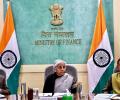
The Budget assumes significance as it comes on the back of lower-than-expected growth numbers during the second quarter and geopolitical uncertainty.
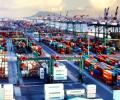
100-day agenda: Commerce ministry pushes for separate logistics department

'Investment by insurers in the Bima Sugam India Federation is illegal as it is a private limited company.'

The Ministry of Information and Broadcasting (I&B ministry) may launch its review of the government's plan to potentially reserve the crucial C-band of radio frequencies for 5G and 6G telecommunication (telecom) use, said officials. While the incumbent broadcasting operators have warned that the plan will leave "precious little spectrum" for broadcasting services, telecom service providers (TSPs) have pressed hard for getting access to the C-band. In multiple letters to the I&B ministry over the past month, the News Broadcasters & Digital Association (NBDA) has said the industry would be left with precious little spectrum for broadcasting services if the Department of Telecommunications (DoT) further allocates the scant C-band for 5G.

Barring coal, electricity and steel, all sectors -- crude oil, natural gas, refinery products, fertiliser and cement -- recorded negative growth in September 2020.
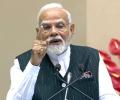
Citing evolving needs and aspirations of the citizens, he said that the civil service must adapt to contemporary challenges to remain relevant.

More than 40 new product launches are expected at the upcoming Auto Expo which will be held under the umbrella of Bharat Mobility Global Expo 2025 from January 17-22, a government official said on Tuesday. With visas continuing to be an issue, large scale participation of Chinese companies are unlikely although some of them are participating at the expo, Joint Secretary at Ministry of Commerce and Industry Vimal Anand said at the sidelines of curtain raiser of 'Bharat Battery Show' which will also be a part of the Bharat Mobility Global Expo 2025.

The Indian government has appointed Finance Secretary Tuhin Kanta Pandey as the new chairman of the Securities and Exchange Board of India (SEBI). Pandey, a 1987-batch IAS officer, will replace Madhabi Puri Buch, whose three-year tenure ends on February 28. Pandey's appointment comes at a time when the markets are experiencing bear pressure due to withdrawals by foreign institutional investors (FIIs). Pandey has extensive experience in the finance ministry, having served as the longest-serving secretary in the Department of Investment and Public Asset Management (DIPAM) and the Department of Public Enterprises (DPE). He also played a key role in the framing of the 2025-26 Budget and the drafting of the new Income Tax Bill. Pandey's appointment is for an initial period of three years.

The need for a manufacturing policy, reining in food inflation and raising investment in the country were among key suggestions given by economists who met Finance Minister Nirmala Sitharaman and senior ministry officials in the first round of pre-Budget consultations on Friday.

ONGC's overseas arm applied for a sanctions waiver to access $500 million dividend from two Venezuelan projects.
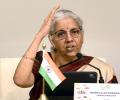
Issues related to the proposed free trade agreement (FTA) and bilateral investment treaty between India and the UK are expected to figure during the three-day visit of Finance Minister Nirmala Sitharaman to London from April 8-10, official sources said. The minister will attend a host of meetings, including the India-United Kingdom Economic and Financial Dialogue, in London.

India's Finance Minister Nirmala Sitharaman has announced an ambitious plan to develop the country's top 50 tourist destinations in a "challenge mode", with the aim of boosting employment-led growth and attracting international visitors. The Ministry of Tourism has received a significant budget increase for 2025-2026, with a focus on enhancing tourism infrastructure, promoting domestic and international travel, and ensuring the safety of tourists, particularly women. The government plans to promote homestays, improve connectivity to tourist spots, and provide performance-linked incentives to states that demonstrate effective destination management. The budget also includes investments in public enterprises, skill development programs, and initiatives to promote medical tourism and spiritual tourism.


The "construct of the DPDP Act" cannot be changed at this stage, though there may be some minor tweaks in the language of the Rules and formats in certain legitimate cases.
